
MK & CO. - A Company of Quality
← BACK TO BLOG
Tips & Insights25 September 2026

A Guide to Large Format Tiles for Modern Projects

Discover how large format tiles can create a clean, continuous look with fewer grout joints. Learn about sizes, benefits, applications, finishes, installation, maintenance, and how to choose the right tiles for modern projects.

M

Written by

M K & CO.
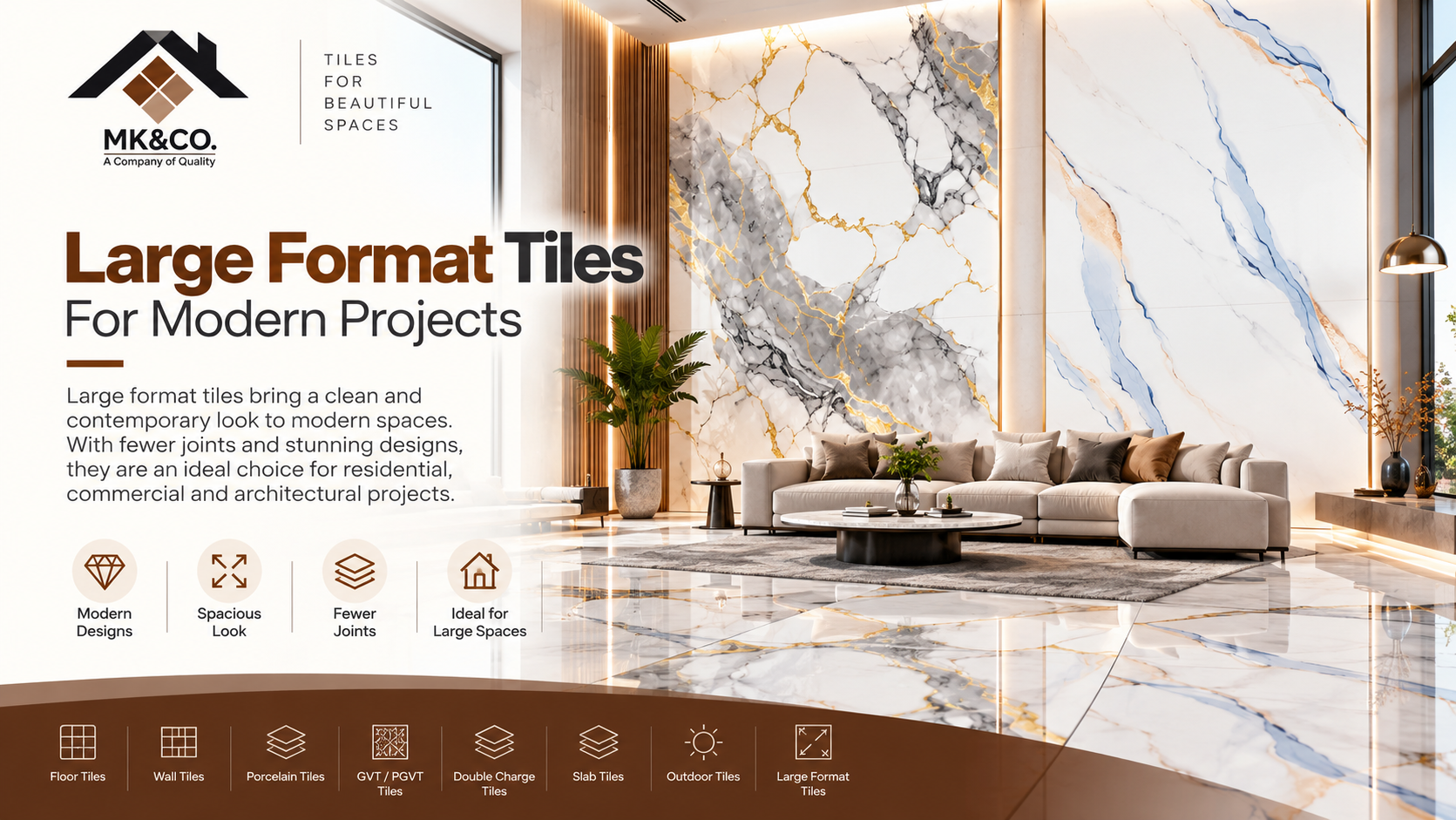
A Guide to Large Format Tiles for Modern Projects
A Guide to Large Format Tiles for Modern Projects The right tile can change how a space looks and feels. Large format tiles are a popular choice for modern interiors because they can create a more continuous surface with fewer grout joints. They are used in residential and commercial projects, from living rooms and kitchens to offices and feature walls. Choosing the right option requires more than selecting a larger tile. Size, material, surface finish, intended use, and installation requirements all influence the final result. What Are Large Format Tiles? Large format tiles are larger-than-conventional tiles used for flooring, wall coverings, and other architectural surfaces. The exact definition can vary according to the applicable industry standard and market. In some US industry references, tiles with at least one edge of 15 inches (381 mm) or longer are classified as large format, while newer terminology references use a different threshold. Common sizes available in some product ranges include: • 600 × 1200 mm: Suitable for many residential floors and walls. • 800 × 1600 mm: An option for larger interior surfaces. • 1200 × 2400 mm: A larger slab format that may suit feature walls and expansive surfaces. Availability varies by manufacturer and collection. These dimensions are examples, not a complete list of standard sizes. Key Benefits of Large Format Tiles Fewer grout joints: Larger tiles can reduce the number of visible grout lines, creating a more continuous appearance. A spacious visual effect: When the size, colour, and layout suit the room, larger tiles can help interiors feel more open. Design flexibility: Marble-look, stone-look, and concrete-look finishes provide options for different interior styles. Routine maintenance: Fewer grout joints can mean fewer areas where dirt accumulates. Cleaning requirements still depend on the tile finish, grout, and manufacturer's instructions. Where Can You Use Large Format Tiles? The appropriate tile depends on the surface, expected use, and product specifications. Living rooms: Colour, pattern, room dimensions, and wear resistance. Kitchens: Stain resistance, cleaning requirements, and floor slip resistance. Bathrooms: Wet-area suitability and slip resistance for floors. Offices and showrooms: Foot traffic, durability, and maintenance. Feature walls: Tile weight, fixing method, and surface preparation. Outdoor spaces: Exterior suitability, weather exposure, and slip resistance. Always check whether the selected product is rated for its intended application. A tile suitable for an indoor wall may not be suitable for an outdoor floor. How to Choose the Right Large Format Tiles 1. Choose the right size Consider room dimensions, doorways, layout, and the number of cuts needed. Larger tiles can work in compact rooms too, but careful planning helps reduce awkward cuts and unnecessary wastage. 2. Select the right finish • Matte: Often suits understated, contemporary interiors. • Glossy: Reflects light and creates a polished appearance. • Textured: May provide better grip when the product has suitable slip-resistance performance. Do not judge floor safety by appearance alone. Check the manufacturer's slip-resistance information for the intended conditions. 3. Match the colour and pattern to the space Light shades can help a room feel brighter, while darker shades can create contrast. Marble-look designs offer a classic appearance, and concrete-look finishes suit more understated interiors. Check physical samples under the lighting conditions of the actual room before making a final selection. 4. Check the material and specifications Porcelain tiles are available in many large formats and can offer low water absorption when manufactured to the relevant requirements. However, durability and suitability depend on the individual product, its surface, and the intended application. Review the product's technical data rather than relying on appearance alone. 5. Consider the total project cost The tile price is only one part of the budget. Account for adhesive, grout, surface preparation, cutting, wastage, transportation, handling, and installation. Request an itemised estimate so you can compare options accurately. Installation and Maintenance Tips Large format tiles need careful installation because their dimensions make substrate preparation and handling particularly important. Industry guidance addresses substrate flatness, installation materials, grout joints, and workmanship requirements. • Prepare the substrate: Ensure the surface meets the applicable flatness and preparation requirements. • Choose suitable installation materials: Follow the tile and adhesive manufacturers' recommendations. • Use experienced installers: Correct handling, adhesive coverage, alignment, and joint spacing help achieve a consistent finish. • Follow the recommended layout: Tile dimensions, warpage, and installation patterns can affect lippage, where adjacent tile edges sit at different heights. • Clean appropriately: Use products recommended for the tile and grout, and follow the manufacturer's care instructions. Proper installation helps reduce the risk of uneven edges, poor bonding, and other avoidable problems. Frequently Asked Questions 1. What sizes are available for large format tiles? Available sizes vary by manufacturer. Examples include 600 × 1200 mm, 800 × 1600 mm, and larger slab formats. Confirm the dimensions offered in the selected collection. 2. Are large format tiles suitable for small rooms? Yes. They can create a more continuous visual appearance by reducing grout joints. The best result depends on the room layout, tile proportions, colour, and cutting plan. 3. Are large format tiles difficult to install? They can require more careful handling and preparation than smaller tiles. A suitably flat substrate, compatible installation materials, and experienced installers are important. 4. Can large format tiles be used in bathrooms? Yes, when the selected product is suitable for the specific surface. Bathroom floors require particular attention to slip resistance, especially in wet areas. Wall and floor requirements may differ. Final Thoughts Large format tiles can create a clean, coordinated look across residential and commercial spaces. Choosing the right dimensions, finish, and material for the intended application is just as important as selecting an appealing design. Compare product specifications, check physical samples, and plan installation requirements before making your decision. These steps help ensure the tiles suit both the appearance and practical needs of your project.

Explore Our Range

Discover Our Ceramic Products

Explore our ceramic product range or contact our team for product information and business enquiries.